Beyond the Plastic Wall: Tactile narrative adventure with HD-pixel art
Beyond the Plastic Wall, developed by Motvind Studios, is a narrative adventure about Hal, a young scavenger who follows a box of letters to find their author. The game centers on exploration and tactile mechanical puzzles that require repairing engines, telephones, and archive machines to progress. Key elements include 2.5D HD-pixel visuals, a cast of boat captains and outcasts, and an emotional emphasis on memory and connection. Fans of slow-paced, story-led indie adventures gain the most from this focused experience.
What kind of game is it?
In this game, you play Hal, a young scavenger who finds a sealed box of letters and sets out to locate its author. The core loop pairs narrative-led exploration with environmental puzzle-solving, asking players to examine ruined sites and restore forgotten devices to advance. Progress depends on reconstructing technology and reading the world, so discovery and deduction drive advancement rather than combat or timed sequences.
Single-player exploration shapes each session
Here the experience unfolds as a solitary journey across lonely shores and the last surviving city, populated by a cast that includes boat captains and outcasts who add lore and motive. Pacing favors deliberate, reflective exploration, a pattern aligned with cited comparisons to Inside and Far: Lone Sails. Interaction centers on conversation and device repair, not competitive or cooperative multiplayer modes.
Visual and audio design set a melancholic tone
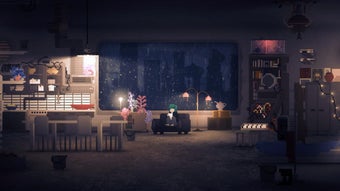
Visually the game adopts a 2.5D HD-pixel approach, blending hand-drawn aesthetics with modern rendering to produce layered, melancholic scenes. Early demo coverage highlights the sound design as a primary contributor to atmosphere, using sparse audio to emphasize isolation. The interface supports direct interaction with mechanical systems, and the title includes localization for English, French, and German for both UI and subtitles.
Difficulty and length favour focused play
As for onboarding, puzzles emphasize mechanical logic over abstract riddles, so learning happens through trial, inspection, and the physical repair of devices such as boat engines and archive computers. The narrative is concentrated into a compact run of roughly four to five hours, which concentrates encounters and reduces optional detours. That structure suits players who prefer a single, contained narrative arc rather than an open-ended sandbox.
A focused, art-first pick for players who value literary journeys
The game is a deliberate, art-driven choice for players who prefer literary, atmospheric adventures and authorial intent. Motvind's background in VFX and ARTE France's collaboration signal an auteur approach to presentation and storytelling. Note that the project targets a 2026 Windows release on Steam and requires a 64-bit system, so PC players should confirm platform compatibility and timing before planning to play.